It seems the runes become more and more popular thanks to The Hobbit movie promotion. Thanks to TORn we know about this advertisement in Los Angeles (see the news). We can read:
Something is afoot! Strange images have been seen all over Los Angeles. What does it mean?? It looks like breakfast – and we all know that Hobbits love breakfast so much, they eat it twice daily. But for those who have a Hobbity appetite for second breakfast, where is the best place to find it? The answer to the riddle will be revealed, in time….
We have deciphered the runes and they read (the mode for English described in the LotR III, Appendix E):
the breakfast ri.. of middle-earth await
What is the third word? Can you help?
G-i-P stands for Gwaith-i-Phethain, ‘The Fellowship of the Word-smiths’ or the linguistic website devoted to post-Tolkienian constructions in the “reconstructed” languages of Middle-earth [link].
The German fan site Herr-der-Ringe-Film has posted new pictures from The Hobbit movies that are currently on display at the Frankfurt Book Fair. The most mysterious one is the picture above. It contains a „wheel of fortune” (?) machine with the signs (numbers?) which are similar to the undeciphered writing system of the Easterling (see here – and the Easterling letters below) in the LotR movies. Can it be the decoration connected with Necromancer, Dol Guldur and the tribes of the East? It is not Tolkienian one (though it may resemble Rúmilian letters sarati).
But we suppose the picture in fact doesn’t show the item from The Hobbit movies. And what do you think?
G-i-P stands for Gwaith-i-Phethain, ‘The Fellowship of the Word-smiths’ or the linguistic website devoted to post-Tolkienian constructions in the “reconstructed” languages of Middle-earth [link].
Znany i kontrowersyjny pisarz Salman Rushdie udzielił wywiadu polskiej edycji Newsweeka. Jak się okazuje Rushdie nie tylko ceni twórczość Tolkiena, ale też filmową ekranizację Władcy Pierścieni Petera Jacksona. Co więcej, dla Rushdiego, film Jacksona ma więcej głębi niż powieść Tolkiena. Przyznacie, że to dość kontrowersyjna teza? W wywiadzie Salman Rushdie mówi:
Newsweek: Ma pan własną ulubioną adaptację filmową książki? Salman Rushdie: Bardzo lubię Lamparta Luchino Viscontiego, Wiek niewinności Martina Scorsese czy The Dead Johna Hustona. Można zrobić dość długą listę filmów, które są absolutnie wspaniałymi adaptacjami powieści, powiedziałbym, że nawet są równe dziełom, od których pochodzą. Czasami mogą być nawet lepsze od swoich źródeł. Na przykład uważam, że filmy Petera Jacksona z serii Władca Pierścieni są lepsze niż powieści Tolkiena.
Moim zdaniem filmowy język Petera Jacksona jest bardziej wyrafinowany niż ten, którego używał Tolkien w swojej prozie. Więc filmy po prostu podnoszą całą historię o klasę w górę. Uwielbiam Władcę Pierścieni jako książkę, ale w tym przypadku myślę, że film po prostu ją przewyższa.
Newsweek:Czeka pan na ekranizację Hobbita? Salman Rushdie: Jestem bardzo ciekawy, chociaż trochę mnie martwi to, że ta mała książeczka będzie podzielona na trzy duże filmy. Mam pewne obawy, ale jestem dobrej myśli.
Source: private correspondence with Earl Carvalho (TORn)
Rivendell or „Imladris” as well as being „the last Homely House” and one of the last bastions of the Elvish presence in Middle-earth, was also the repository of its historical artefacts and manuscripts. Its interior halls were replete with banners, other heraldic devices and works of art and science…
Their walls were also covered with beautiful murals. Some of them contained the tengwar (‚Elvish letters’) inscriptions. Today we want to revisit Rivendell and read all these letters. As far as we can see on the movie pictures in the LotR trilogy and in the Hobbit trailer there are six paintings (their authors were in fact Alan Lee and Daniel Reeve), and three of them with the „Elvish letters”. Here they are. We provide our Readers with transliteration of the tengwar inscriptions:
Among the new photos from the Hobbit application that was launched yesterday (TheOneRing.net writes about it here) we have chosen one which shows more details of Dwalin’s runic tattoo. The Hobbit: An Unexpected Journey will be full of runes. About Dwalin’s runic tattoos we were writing here and here.
[Dwalin’s] tatoos are the pictorial tale about Dwarvish history, laws, customs.
We think that the signs on Dwalin’s fingers are the famous Khuzdûl battle-cry:
Baruk Khazâd! Khazâd ai-mênu! ‚Axes of the Dwarves! The Dwarves are upon you’ (RK, App F)
They are written with Angerthas Moria runes (Baruk Khazâd – right hand, Khazâd ai-mênu – left hand).
The runes in the movie occur in two types: Anglo-Saxon Futhark known in its English version from The Hobbit book and Elvish-Dwarvish Angerthas of Middle-earth known from the inscriptions and an appendix in The Lord of the Rings book. Let us check out Dwalin’s photo! Let us decipher the runes!
G-i-P stands for Gwaith-i-Phethain, ‘The Fellowship of the Word-smiths’ or the linguistic website devoted to post-Tolkienian constructions in the “reconstructed” languages of Middle-earth [link].
To bardzo zła wiadomość dla polskich widzów, którzy czekają na polską premierę nowego filmu na podstawie twórczości J.R.R. Tolkiena. Polska premiera filmu Hobbit: Niezwykła podróż zapowiadana jest na 28 grudnia, gdy w Nowej Zelandii film będzie miał swoją premierę już 28 listopada, w Niemczech 13 grudnia, w USA 14 grudnia, a na Ukrainie… 20 grudnia. Polacy mają jak zwykle pecha, bo nasza premiera jest najpóźniejszą na świecie! (żaden z wymienionych tutajkrajów nie ma premiery tak późno!).
Polski dystrybutor znowu się nie popisał! Błędnie przetłumaczony tytuł (ang. unexpected to z pewnością nie ‚niezwykły’), a teraz kolejny policzek wymierzony polskim miłośnikom Tolkiena i fanom filmów Petera Jacksona…
Chyba, podobnie jak przy premierze Drużyny Pierścienia, redakcja Elendilionu będzie musiała zorganizować autokarową wycieczkę na premierę do Czech albo Niemiec (co za piękny tytuł: Der Hobbit – Eine unerwartete Reise!)… Co Wy na to?
[News from August has been updated! Runes have been almost resolved!]
About the Sindarin/Angerthas inscription on Orkrist’s blade we’ve alredy written here. As Earl Carvalho reports, a TORn board member, Altariel Noldo, has spotted another runic inscription in Sindarin on Orkrist’s scabbard (as shown on a photo on the Weta Collectors Forum) – see the discussion on TORn board here. The photo is reproduced below.
The Cirth runes are better visible on the photo prepared by „seregon13” from the Weta Collectors forum (see here):
So we can see the inscription which reads probably as follows (obscure runes in cursive):
HÜRN O GORW ITHLUIG UI NI MADWEG A SUIG
‚ready for action (pl.) from impetus [of] wisdom-serpents; everlasting I [am] gluttonous and thirsty’
*hürnadj. pl. ready for action (sg. *hurn, cf. hûr n. readiness for action) orhernadj. pl. wounded (sg. harn)
or hürnadj. pl. driven under compulsion, impelled (sg. horn) o prep. from, of gorf gorw, n. impetus, vigor *ithluig, n. wisdom-serpents = dragons ui adj. everlasting, eternal ni pron. I/me madwegadj. gluttonous (PE 17:144) a conj. and *suig adj. thirsty (cf. Quenya soica ‚thirsty’)
[source: David Salo, A Gateway to Sindarin]
We should remember that the sword’s handle in the movie is made of dragon’s (literally lŷg ‘snake’) tooth. It seems that the scabbard is made of the same material. It gives more sense to the scabbard’s inscription.
What do you think about our translation of the Orkrist’s scabbard runes?
G-i-P stands for Gwaith-i-Phethain, ‘The Fellowship of the Word-smiths’ or the linguistic website devoted to post-Tolkienian constructions in the “reconstructed” languages of Middle-earth [link].
Wszystkie te książki ukażą się na polskim rynku (o ich edycję, tłumaczenie i konsultację merytoryczną Marka Gumkowskiego oraz Ryszarda Derdzińskiego zadbało wydawnictwo Amber). Od kilku dni znamy okładki angielskojęzycznych wydań tych książek. A doświadczenie filmowego Władcy Pierścieni uczy nas, że polskie edycje będą miały identyczną szatę graficzną. Co zatem nas czeka tej jesieni w księgarniach? Zobaczmy:
We wtorek 6 listopada b.r. na rynku brytyjskim, amerykańskim i prawdopodobnie polskim ukażą się cztery książki, a piąta – Chronicles: Art and Design – w grudniu b.r.
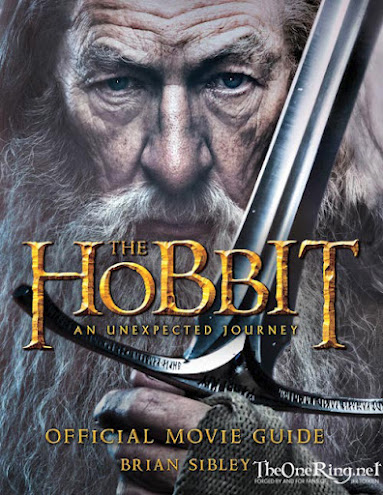
The Official Movie Guide :: Oficjalny przewodnik po filmie
Wejdź w świat Bilba Bagginsa, czytając wywiady przeprowadzone specjalnie dla tej książki z reżyserem Peterem Jacksonem, z grającym rolę Bilba Martinem Freemanem, Ianem McKellenem – Gandalfem i całą plejadą gwiazd, grających w filmie oraz ludzi z produkcji. Poznasz tu sekrety tworzenia filmowego Hobbita a także opowieści o powstawaniu magicznego świata. Książka jest zilustrowana pięknymi fotosami, zdjęciami spoza kulis powstawania filmu, z miejsc, scenografii, działu charakteryzacji i kostiumów. Książkę napisał ekspert od spraw tolkienowskich i oficjalny biograf Jacksona – Brian Sibley.
The Visual Companion :: Filmowe postacie i miejsca
Dołącz do hobbita Bilba Bagginsa, czarodzieja Gandalfa i Drużyny Krasnoludów na czas ich wyprawy po zagrabiony przez smoka Smauga skarb. Opuściwszy wygody norki Bilba wędrowcy muszą zmierzyć się z wieloma niebezpieczeństwami zanim dotrą do swojego złota – z trollami, elfami, goblinami, wargami… Autorką książki jest Jude Fisher, wydawca Tolkiena. To wydanie w twardej oprawie ma piękne ilustracje i prezentuje całkiem nową mapę Śródziemia, która ukazuje całą trasę Drużyny Thorina od Bag End aż po Dzikie Kraje.


 It seems the runes become more and more popular thanks to The Hobbit movie promotion. Thanks to TORn we know about this advertisement in Los Angeles (see the news). We can read:
 Visit us on Facebook!


 Znany i kontrowersyjny pisarz Salman Rushdie udzielił wywiadu polskiej edycji Newsweeka. Jak się okazuje Rushdie nie tylko ceni twórczość Tolkiena, ale też filmową ekranizację Władcy Pierścieni Petera Jacksona. Co więcej, dla Rushdiego, film Jacksona ma więcej głębi niż powieść Tolkiena. Przyznacie, że to dość kontrowersyjna teza? W wywiadzie Salman Rushdie mówi: