Earl Carvalho from TheOneRing.net team reports that at Day 1 of ComicCon, the TORn staff down in San Diego caught some close-ups of weapon replicas from The Hobbit movie.
This close-ups are very interesting for our research. The first picture (click the photo below) shows the runic inscriptions on two Dwalin’s axes. In Angerthas Moria this inscriptions are as follows:
UMRAZ
UKhLAT
As our Special Spy reports (attention! it’s an exclusive G-i-P information!) these inscriptions are in (David Salo’s) Neo-Khuzdûl and probably mean: Grasper and Keeper (it’s a linguistic and literary pun because two Sisters Brontë’s dogs had the same names). Additional information about Dwalin’s tatoos which comes from the Spy is as follows: the tatoos are the pictorial tale about Dwarvish history, laws, customs. One of them is the famous Khuzdûl battle-cry: Baruk Khazâd! Khazâd ai-mênu! written with Angerthas Moria runes. The Spy told us also about Bifur’s special feature. Because of his special disability (?) he will speak only in Khuzdûl.
Another photo from ComicCon shows the details of the Orkrist blade. We can see there Elvish runes (Angerthas Daeron) and the Sindarin inscription which is as follows:
The sword’s handle is made of dragon’s (literally lŷg ‚snake’) tooth. Our Special Spy told us that Thranduil’s sword will have a lot of runic inscriptions too. We hope to find out what they are soon.
In The Hobbit movie we will find probably another language constructed specially for the films. It will be Wargs’ tongue. The chief of the Wargs, giant white wolf will comunicate with his Wargs in a simple gluttal language.
G-i-P stands for Gwaith-i-Phethdain, ‘The Fellowship of the Word-smiths’ or the linguistic website devoted to post-Tolkienian constructions in the “reconstructed” languages of Middle-earth [link].
Wydawnictwa anglojęzyczne (HarperCollins w Zjednoczonym Królestwie oraz Houghton Mifflin w Stanach Zjednoczonych), a jednocześnie polskie wydawnictwo Amber przygotowują dla miłośników Tolkiena i fanów tolkienowskich ekranizacji kilka interesują cych książek, które ukażą się w księgarniach w listopadzie b.r. W Polsce ukażą się następujące tytuły:
The Hobbit: An Unexpected Journey Visual Companion – Jude Fisher The Hobbit: An Unexpected Journey Official Movie Guide – Brian Sibley The Hobbit: An Unexpected Journey Almanac – Paddy Kempshall
[nie znamy jeszcze oficjalnych polskich tytułów]
Tytuły, które nie mają planowanej polskiej edycji (albo my nic o tym nie wiemy) to:
The Hobbit: The World of the Hobbits – Paddy Kempshall The Hobbit: An Unexpected Journey Photo Storybook – Paddy Kempshall
Przygotowywana jest też książka (oraz jej polski przekład) pod roboczym tytułem WETA Art of The Hobbit: An Unexpected Journey.
Wydawnictwo Amber zaprezentuje też polskim czytelnikom jesienią wspaniałą książkę W. G. Hammonda i Ch. Scull pt. J.R.R. Tolkien: The Art of ‚The Hobbit’ (pisaliśmy o niej tutaj). Tę ostatnią pozycję tłumaczy Ryszard „Galadhorn” Derdziński. Jednocześnie jest on konsultantem merytorycznym książek okołofilmowych.
Ceny biletów: od 22,- do 35,- zł za całą noc w kinie. Przedsprzedaż rusza w piątek 13 lipca (pojutrze).
ENEMEF (Nocny Maraton Filmowy): Noc Reżyserskich Wersji Władcy Pierścieni to niepowtarzalna okazja żeby po raz pierwszy na ekranach polskich kin zobaczyć całą trylogię J.R.R. Tolkiena w wersji reżyserskiej. W repertuarze znalazły się wszystkie części serii:
Władca Pierścieni: Drużyna Pierścienia – wersja reżyserska, Władca Pierścieni: Dwie Wieże – wersja reżyserska, Władca Pierścieni: Powrót Króla – wersja reżyserska,
MEGA-ZNIŻKA! Chcesz płacić nawet o 10,- zł mniej za każdy bilet? Wystarczy zarejestrować się na www.enemef.pl i mieć trochę szczęścia! Dowiedz się więcej tutaj.
Uwaga, uwaga – czekaliście na to wiele lat. Już 3 sierpnia w kinach Helios w całej Polsce odbędzie się wielki nocny maraton filmowy z wszystkimi częściami Władcy Pierścieni w wersjach rozszerzonych. Wszystkie części będą odtwarzane z kopii cyfrowych, co gwarantuje znakomitą jakość obrazu i dźwięku. Maraton wystartuje o godz. 21.00, a zakończy się o godz. 8.00 dnia następnego. Bilety w cenach 29 zł (normalny) i 27 zł (ulgowy) są już dostępne w sprzedaży (on-line od 13 lipca).
Poniżej zamieszczamy listę kin Helios, w których odbędzie się maraton:
Uwaga, uwaga – Peter Jackson ogłosił właśnie, że zakończył zdjęcia do Hobbita! Na facebooku reżysera pojawił się wpis o treści: Udało nam się! 266 dzień zdjęciowy i koniec zdjęć do „Hobbita”. Dzięki fantastycznej obsadzie i ekipie za to, że udało nam się zajść tak daleko i wam wszystkim za wsparcie! Następny przystanek – montażownia. A i Comic-Con! Tym samym możemy być już spokojni o losy filmu, pozostała postprodukcja i ewentualne poprawki. Zapewne też wkrótce ruszy pełną parą machina promocyjna , a kilka dni temu zostały udostępnione zupełnie nowe ZDJĘCIA Z FILMU.
Co ciekawe, książki (tzw. przewodniki filmowe) dotyczące filmu są gotowe od kilku miesięcy, a polscy tłumacze zakończyli już ich przekład. Podobnie jak to miało miejsce w przypadku Władcy Pierścieni, polskie edycje tych książek wyda Wydawnictwo Amber. Z tej okazji możemy się też spodziewać wznowień oraz nowych książek okołotolkienowskich – Amber wyda późną jesienią polski przekład The Art of the Hobbit. Przeczytaj resztę wpisu »
Co my tu mamy, kolejny siódmy już odcinek dokumentu video, w którym reżyser Peter Jackson przybliża fanom kolejne etapy powstawania długo oczekiwanego filmu.
Były pierwsze zdjęcia, był plener, było wprowadzenie do 3D i kamer RED, była logistyka i przedstawienie aktorów. W tym odcinku pan Piotr ( jak nazywa go Tornene) wprowadza nas w świat nie tylko zdjęć studyjnych, ale również obnaża całe zaplecze pracy w studiu filmowym.
Czyli po kolei. Peter Jackson opowiada o początkach studia, które pierwotnie było fabryką farb, zakupione tuż przed produkcją Władcy Pierścieni, dobudowano studio dźwiękowe, kolejna hala powstała na potrzeby filmu King Kong, i dwie następne w których teraz powstaje Hobbit. Następnie przenosimy się do samego rdzenia studia, czyli do biur. Kolejnym miejscem które odwiedzamy z kamerą jest parking przyczep w których aktorzy przygotowują się do zdjęć. Dalej przetaczamy się przez peruki, stroje, broń, departament artystyczny, wydział z modelami, obsługę dźwięku, światła i kamer itd
Nie będę chyba jednak streszczał wszystkiego co Peter Jackson przygotował dla czekających w zniecierpliwieniu fanów. Sami zobaczcie, ja się nieźle ubawiłem oglądając ten materiał dziś rano. Nie obędzie się bez niespodzianek… i dobrego humoru. Zapraszamy!
We wtorek 24 kwietnia podczas CinemaCon w Las Vegas, Peter Jackos oraz Warner Bros, zaprezentowali przed wybraną publicznością (w większości właścicielami kin) dziesięciominutowy fragment filmu Hobbit. Jak się wkrótce okazało odbiór widzów był mieszany, większość nieprzychylnie odniosła się do zastosowania nowatorskiej (na tą skalę) technologii 48 klatek na sekundę (standardowo filmy wykonane są w technice 24 klatek na sekundę).
Prezentowany fragment, otwiera scena z krajobrazem Nowej Zelandii, obraz jest o wiele bardziej klarowny niż większość filmów przyrodniczych, Los Angeles Times opisuje tą scenę filmu jako hiperrealistyczną. Wszystko to zmienia się w momencie gdy pojawili się aktorzy, każdy ich ruch był krystalicznie czysty i ostry. Niektórzy widzowie narzekali że materiał nie dawał odczucia tradycyjnego filmu.
Peter Jackson oznajmił, iż negatywne odczucia co do zaprezentowanego materiału i nowej technologi nie zatrzymają produkcji, oraz iż ma nadzieję, że filmowi malkontenci zobaczą film i sami go ocenią. Nikt nie będzie się zatrzymywał – powiedział reżyser – ta technologia będzie się tylko rozwijać. Jackson ma nadzieję że krytycy formatu zmienią zdanie po obejrzeniu ukończonego filmu.
Z początku odczucie może być dziwne, ponieważ nigdy nie widziałeś tak zrobionego filmu, to całkowicie nowe doświadczenie. Ale to uczucie nie trwa cały film. To całkiem inne wrażenie, niż kiedy oglądasz 10 minut zmontowanego materiału podczas prezentacji technicznej.
O prawdziwym odbiorze możemy mówić kiedy widzowie mają szansę obejrzeć cały film – dodaje Peter Jackson.Przeczytaj resztę wpisu »
A Tolkien scholar, DarkJackal, having discovered the highest resolution images from The Hobbit movie of Bilbo holding the contract which Thorin & Co. wrote, has done good job trying to decipher it. His findings are based on some visible evidence, and a whole lot of guesswork. Let us see what can be seen on this picture (read the whole text from Heirs of Durin website).
In the movie the text of Bilbo’s contract is much more developed than in the book: maybe even ten times longer – see (1) below. DarkJackal has divided the contract into sections roughly based on paragraphs, labeled A through L, which are upside-down in the image. His attempt to sharpen the writing in Photoshop actually helped very little. His reconstruction is a mere guess in many places (read about his method in the linked text). The result (very interesting!) can be found there too. DarkJackal will be very thankful if somebody could help him to decipher whole document. Let us help him!
(1) In his book J.R.R. Tolkien provided us with this text of Thorin’s text:
“Thorin and Company to Burglar Bilbo greeting!
For your hospitality our sincerest thanks, and for your offer of professional assistance our grateful acceptance. Terms: cash on delivery, up to and not exceeding one fourteenth of total profits (if any); all traveling expenses guaranteed in any event; funeral expenses to be defrayed by us or our representatives, if occasion arises and the matter is not otherwise arranged for.
Thinking it unnecessary to disturb your esteemed repose, we have proceeded in advance to make requisite preparations, and shall await your respected person at the Green Dragon Inn, Bywater, at 11 a.m. sharp. Trusting that you will be punctual,
We have the honour to remain
Yours deeply
Thorin & Co.”
The 4th Production Video Blog of The Hobbit contains a short scene of what appears to be Gandalf etching his mark on Bilbo’s door. (See 05:00 in the video posted here). The image shows a bent nail at the base of Gandalf’s staff (see part of his cloak to the right), etching a rune into Bilbo’s green door. The rune is certh 19 G which, in addition to being the first sign in Gandalf’s name, is also used as his mark throughout The Lord of the Rings — e.g., labeling the firecrackers he brings for Bilbo’s birthday party, as a signature in his urgent letter to Frodo, as his secret mark on Weathertop, etc.
Readers of The Hobbit will remember that Gandalf marks Bilbo’s door in order to lead the Dwarves to Bag End: „… with the spike of his staff [he] scratched a queer sign on the hobbit’s beautiful green front-door.” The next day, when he arrives with the Dwarves, he beats „a hard rat-tat on the hobbit’s beautiful green door … with a stick” which „knock[s] out the secret mark that he had put there the morning before”. Bilbo is of course unaware of any of this, and therefore expresses some surprise and irritation at the Dwarves’ presumptuous arrival and assumptions, remarking: „I have no signs on my door—it was painted a week ago—, and I am quite sure you have come to the wrong house”. Gloin responds: remarking „I assure you there is a mark on this door—the usual one in the trade … ‘Burglar wants a good job, plenty of Excitement and reasonable Reward,’ that’s how it is usually read.”
Of course, Tolkien never provided his readers with an image of this complex mark. Rather than invent it, the filmmakers seem to have opted instead for the reasonable replacement of Gandalf’s initial.
Marc Zender
[I would like to add to this information that in fact we do know the actual sign Tolkien wanted to appear on Bilbo’s door. In J.R.R. Tolkien: Artist & Illustrator by Scull & Hammond, p. 99, we can find Tolkien’s sketch with the door of Bag End, with Gandalf and three mysterious signs. They seem to be Anglo-Saxon runes (used in The Hobbit for the Dwarvish script): B for Burglar, D for Danger and a sign of a jewel/diamond for Reward. See the actual inscription in our news from 2009 – here).
This is our news from January 4th, 2012. We have changed the picture: now you can see there the results of the cooperation of Marc Zender, Florian „Lothenon” Dombach and Richard „Galadhorn” Derdzinski in deciphering the runic signs. See also the comments. There are new theories there.
Elrond knew all about runes of every kind. That day he looked at the swords they had brought from the trolls’ lair, and he said: „They are not troll-make. They are old swords, very old swords of the High Elves of the West, my kin. They were made in Gondolin for the Goblin wars. (…) This, Thorin, the runes name Orcrist, the Goblin-cleaver in the ancient tongue of Gondolin; it was a famous blade.”
(The Hobbit, „A Short Rest”)
Earl Carvalho, a member of TheOneRing.net staff, has informed us about these interesting examples of the use of Tolkien’s runes in The Hobbit movie pre-production. Thanks to the publication of the Dwarves’ characters photos (see Thorin’s photo – here) we can see some interesting Cirth inscriptions on Thorin’s sword, Orcrist, and on his ring:
1. Thorin’s Ring – The ring on Thorin’s right hand seems to have the Dwarven (Angerthas Moria?) rune R on its front face. It’s difficult to determine what the runes on the other faces say (if those actually are runes), but it is possible that another rune is HW. Thorin also wears another ring on his left hand, and it seems to have some sort of design, but we cannot be certain that it works itself out to a rune.
2. Orcrist – The pommel of Thorin’s sword has the Elvish runes O R KH R I S T inscribed on it. The language is Sindarin and the script are old Elvish runes called Angerthas Daeron (we shall remember that the runes of Middle-earth were primarily the script of the Elves of Beleriand in the First Age). Let us compare this inscription with the runes from another sword found by Thorin’s Company in the trolls’ lair – Glamdring (see here).
Photo of Orcrist and Thorin’s Ring edited by Ryszard „Galadhorn” Derdzinski
G-i-P stands for Gwaith-i-Phethdain, ‘The Fellowship of the Word-smiths’ or the linguistic website devoted to post-Tolkienian constructions in the “reconstructed” languages of Middle-earth [link].


 As our Special Spy reports (attention! it’s an exclusive G-i-P information!) these inscriptions are in (David Salo’s) Neo-Khuzdûl and probably mean: Grasper and Keeper (it’s a linguistic and literary pun because two Sisters Brontë’s dogs had the same names). Additional information about Dwalin’s tatoos which comes from the Spy is as follows: the tatoos are the pictorial tale about Dwarvish history, laws, customs. One of them is the famous Khuzdûl battle-cry: Baruk Khazâd! Khazâd ai-mênu! written with Angerthas Moria runes. The Spy told us also about Bifur’s special feature. Because of his special disability (?) he will speak only in Khuzdûl.
 Another photo from ComicCon shows the details of the Orkrist blade. We can see there Elvish runes (Angerthas Daeron) and the Sindarin inscription which is as follows:

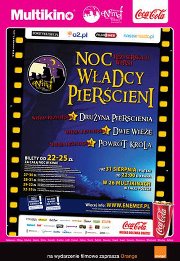
 Uwaga, uwaga – czekaliście na to wiele lat. Już 3 sierpnia w kinach Helios w całej Polsce odbędzie się wielki nocny maraton filmowy z wszystkimi częściami Władcy Pierścieni w wersjach rozszerzonych. Wszystkie części będą odtwarzane z kopii cyfrowych, co gwarantuje znakomitą jakość obrazu i dźwięku. Maraton wystartuje o godz. 21.00, a zakończy się o godz. 8.00 dnia następnego. Bilety w cenach 29 zł (normalny) i 27 zł (ulgowy) są już dostępne w sprzedaży (on-line od 13 lipca).
 Uwaga, uwaga – Peter Jackson ogłosił właśnie, że zakończył zdjęcia do Hobbita! Na facebooku reżysera pojawił się wpis o treści: Udało nam się! 266 dzień zdjęciowy i koniec zdjęć do „Hobbita”. Dzięki fantastycznej obsadzie i ekipie za to, że udało nam się zajść tak daleko i wam wszystkim za wsparcie! Następny przystanek – montażownia. A i Comic-Con! Tym samym możemy być już spokojni o losy filmu, pozostała postprodukcja i ewentualne poprawki. Zapewne też wkrótce ruszy pełną parą machina promocyjna , a kilka dni temu zostały udostępnione zupełnie nowe
 We wtorek 24 kwietnia podczas CinemaCon w Las Vegas, Peter Jackos oraz Warner Bros, zaprezentowali przed wybraną publicznością (w większości właścicielami kin) dziesięciominutowy fragment filmu Hobbit. Jak się wkrótce okazało odbiór widzów był mieszany, większość nieprzychylnie odniosła się do zastosowania nowatorskiej (na tą skalę) technologii 48 klatek na sekundę (standardowo filmy wykonane są w technice 24 klatek na sekundę).


